Emerging Dimensions In Biotechnology: Research, Innovation And Application (volume 1) NEW
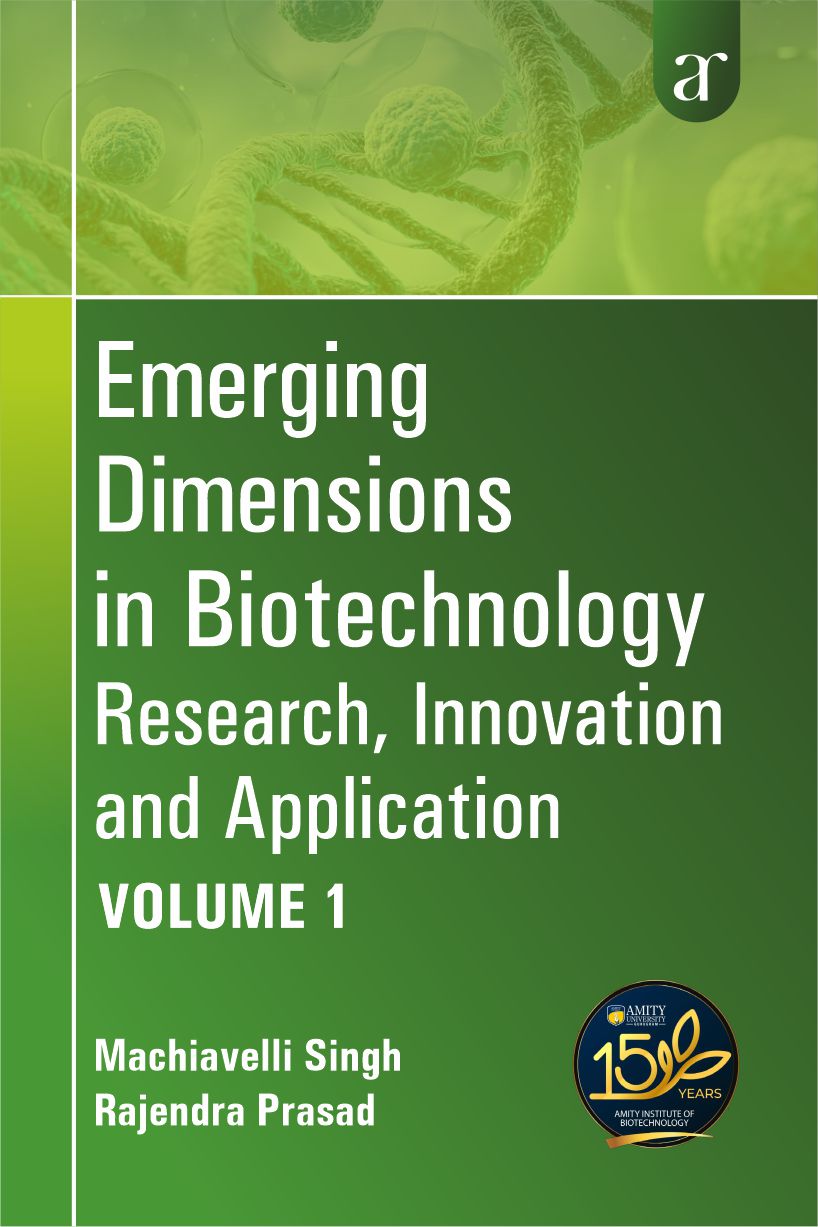

Biotechnology has become an essential scientific discipline at the intersection of discovery, innovation, and application, playing a crucial role in addressing modern challenges in health, agriculture, and the environment. Reflecting this dynamic field, Emerging Dimensions in Biotechnology: Research, Innovation, and Application is a two-volume edited book series that captures the breadth and interdisciplinary nature of contemporary biotechnology. The series consists of twenty-eight peer-reviewed chapters, systematically arranged into six thematic sections: Molecular, Cellular, and Computational Biology; Infectious Diseases and Diagnostics; Cancer Biology; Agricultural and Environmental Biotechnology; Nanobiotechnology and Biosensing Applications; and Industrial and Translational Biotechnology. Contributions from researchers at the Amity Institute of Biotechnology highlight integrative research that combines foundational biological concepts with clear translational and applied outcomes, all curated by expert section editors to ensure coherence and academic rigor.
Emerging Dimensions in Biotechnology: Research, Innovation, and Application, Volume I provides a comprehensive insight into the latest advancements in foundational areas of biotechnology. The volume is organized into three major sections. The first, Molecular, Cellular, and Computational Biology, presents cutting-edge work on artificial intelligence for understanding protein unfolding relevant to neurodegenerative diseases, deep learning for genomics and medical imaging, nonlinear system modeling through reservoir computing, graph-based methods for detecting mutagenicity, and the application of machine learning in epigenome engineering for crop improvement. The section on Infectious Diseases and Diagnostics explores critical topics such as antifungal drug resistance, the role of fungal membrane transporters, innovative antifungal strategies, advances in CRISPR-Cas diagnostics, and the multifaceted signaling functions of cyclic di-AMP in bacteria. The final section, Cancer Biology, investigates the roles of adhesion GPCRs in cancer, the impact of O-GlcNAcylation on cancer progression, noncoding RNA-driven immune engineering for next-generation cancer immunotherapies, and contemporary challenges and treatments for dermatological disorders. Collectively, these chapters highlight the integration of advanced computational tools, molecular biology, and innovative diagnostic and therapeutic strategies, reflecting the interdisciplinary and translational focus of modern biotechnology.
Prof. Rajendra Prasad
 555
555 MOLECULAR, CELLULAR AND COMPUTATIONAL BIOLOGY
Section Editor: Dr. Amresh Prakash
- Artificial Intelligence (AI) Based Identification of Conformational Ensembles Underlying the Protein Unfolding Pathways for Targeting Neurodegenerative Diseases
Priyanka Kataria and Amresh Prakash - AI and Deep Learning Approaches for Genomic and Medical Image pattern Recognition
Sapna Yadav and Amresh Prakash - Modelling and Learning Biological Dynamics: A Nonlinear System and Reservoir Computing Approach
Anumandala Chandana Priya, Shiva Dixit, and Nirmal Punetha - Graph-Based Classification Methods for Detecting Mutagenicity
Anjali Pal and Nirmal Punetha - Epigenetic Regulation and Machine-Learning–Driven Epigenome Engineering for Crop Improvement
Mohit Prasad, Anuj Kumar, and Archana Singh
INFECTIOUS DISEASES AND DIAGNOSTICS
Section Editor: Dr. Saif Hameed
- Decoding Antifungal Drug Resistance in the Emerging Yeast Pathogen Candidozyma auris
Anshu Chauhan, Danvey Twineth Laitthma and Rajendra Prasad - The "Ins and Outs" of Fungal Membrane Transporters: Charting New Strategies to Combat Antifungal Resistance
Sarita Malik and Atanu Banerjee - Innovative Antifungal Strategies: Epidemiological Insights, Diagnostic Advances and Therapeutic Perspectives
Yamini Saini, Zeeshan Fatima and Saif Hameed - CRISPR-Cas Driven Diagnostics: A Comprehensive Overview
Ankush Kaushik, Saif Hameed, and Zeeshan Fatima - Cyclic di-AMP: A Cyclic Dinucleotide with Multiple Signaling Roles in Bacteria
Sudhanshu Mudgal, Nisha Goyal, Rahul Saginela and Krishna Murari Sinha
CANCER BIOLOGY
Section Editor: Dr. Gargi Bagchi
- Adhesion GPCRs in Cancer: Emerging Roles and Therapeutic Potential
Mukesh Balyan and Gargi Bagchi - O-GlcNAcylation in Cancer Progression: Mechanisms and Therapeutic Implications
g Roles and Therapeutic Potentialg Roles and Therapeutic Potential - RNA-Driven Immune Engineering: Noncoding RNAs as Next-Generation Cancer Immunotherapeutics
Dharmendra Kumar Soni - Skin in the Modern World: Disorders, Treatments, and the Way Forward
Sarmistha Mahanty
Book Details
Emerging Dimensions In Biotechnology: Research, Innovation And Application (volume 1) NEW
REFERENCE BOOK
336
0
0
AMERICAN ROYAL (6X9)
350 Gms
All Rights Reserved
M/s AGROBIOS RESEARCH
PG STUDENTS | SCIENTISTS AND RESEARCHERS |
Biotechnology , Veterinary , Veterinary Medicine , Veterinary Pathology , Molecular Biology ,
Books with Same Authors

Books with Similar Subjects